
As marketing leaders look ahead to a new year, one thing is clear: the old planning playbook no longer works. Markets shift faster, budgets tighten more quickly, and the gap between strategy and execution widens when teams rely on rigid, outdated approaches. Today’s marketing executives need plans that are sharper, more adaptive, and deeply aligned with both customer behavior and business realities.
To help you build a strategy that actually delivers, we gathered insights from top CMOs, strategists, and marketing operators across industries. Their advice goes beyond surface-level trends and focuses instead on the fundamentals that drive real impact.
In this blog, you’ll find 12 actionable, expert-backed tips to elevate your 2026 planning. Whether you're rethinking your budget, refining your message, or rebuilding your process from the ground up, these perspectives will help you cut through the noise and set your team up for measurable growth in the year ahead.
- Start With Reflection Rather Than Projection
- Build Three Budget Scenarios Instead of One
- Focus on People Rather Than Platforms
- Incorporate Agility Into Strategy From Outset
- Move Plans Into Dedicated Marketing Platform
- Lock Your Timeline Before You Choose Tactics
- Build Content Strategy Around Thought Leadership
- Pressure-Test Your Team's Worst Channel First
- Utilize Customer Insights to Help Build Your Marketing Strategies
- Stay Multi-Dimensional and Keep Experimenting Constantly
- Design Agile Framework, Not Fixed Blueprint
- Align Marketing Plans With Sales Department
Start With Reflection Rather Than Projection
My top tip for marketing executives planning for the new year is to start with reflection, not projection. Too many teams rush into new goals, platforms, or tactics without fully understanding what worked and why. Before setting your 2026 strategy, audit your data and your message. Look at which campaigns actually moved the needle and which ones just looked good on paper. Metrics like engagement and clicks matter, but the real insight comes from understanding why people responded the way they did.
Once you've identified those insights, simplify. Instead of trying to be everywhere, double down on the channels and stories that consistently connect with your audience. Build your plan around fewer, higher-impact initiatives that align with your brand's long-term identity, not just the latest trends.
And finally, leave space for flexibility. Social media and consumer behavior shift quickly, so create a system that enables testing, adaptation, and learning throughout the year. The goal isn't to predict every trend; it's to build a strategy grounded enough to stay consistent and agile enough to evolve.
Justin Schulze, Digital Marketing Expert, Schulze Creative
Build Three Budget Scenarios Instead of One
Stop planning for one version of the year ahead and build three budget scenarios instead. Most executives create a single plan assuming stable conditions, then panic when reality shifts. Innovative leaders prepare optimistic, conservative, and disruptive models so they can pivot without freezing. The companies that win in uncertain markets aren't the ones with perfect predictions; they're the ones ready to adapt when predictions fail.
I've watched too many marketing teams waste January through March scrambling to revise plans they should have built flexibility into from the start. Scenario planning isn't pessimistic; it's strategic.
Nicola Boldrini, CMO, FinchTrade
Focus on People Rather Than Platforms
If there's one thing I've learned after years in marketing, it's that strategy ages fast, but understanding people never does.
So as we step into a new year, my advice is simple: Plan less around platforms and more around people.
Trends will shift. Algorithms will rewrite themselves. AI will continue to change the way we work. But what stays constant is human attention and the emotion behind it. Instead of chasing every new channel, double down on what earns trust. Craft stories that sound like they were written for humans, not audiences. Let data guide your choices, but let empathy shape your voice.
In 2025, great marketing won't come from predicting the next trend; it'll come from deeply understanding why people care in the first place. Because when you get that part right, everything else, from conversions to content, falls beautifully into place.
Lata Tewari, CMO, Webuters Technologies Pvt Ltd
Incorporate Agility Into Strategy From Outset
As you prepare for the new year, my number one piece of advice for marketing leaders is to incorporate agility into your strategy from the outset. The pace of change in the digital world is faster than the pace of your annual plans, so to succeed, you need to set clear goals while leaving enough flexibility.
At Digital Silk, we have approached each quarter as a testing and learning phase to see what works and what doesn't. Then, we further hone our messaging and repurpose budgets into media that generate better engagement. Flexibility means creating a strategy that allows you to reassess and make changes to optimize outcomes in real time. The teams that stay curious and pivot quickly will be the ones that drive growth in 2026.
Jordan Park, Chief Marketing Officer, Digital Silk
Move Plans Into a Dedicated Marketing Platform
My top tip for marketing executives planning for the new year is to get your plans out of spreadsheets, slide decks, and long email threads. Those formats make it far too easy for plans to be created, presented, and then forgotten. Instead, move everything into a dedicated marketing planning platform that connects directly with your CRM and project management tools. When your plan becomes a living document, it reflects progress and performance in real time. You can see what's working, what's slipping, and where resources need to shift. This approach also saves hours of manual work, such as updating slides or chasing down data for reports.
Most importantly, it keeps the plan visible and relevant to the entire team. Planning shouldn't be a once-a-year exercise. It should be an ongoing process that links strategy, execution, and results in one place. Strategy and planning are critical to success. Studies show companies with a solid plan that's reviewed frequently grow twice as fast as those that don't. It's time to focus the right level of attention on planning and the tools that support it.
Steven Manifold, CMO & Director, B2B Planr
Lock Your Timeline Before You Choose Tactics
My top tip is to lock in your timeline before you pick your tactics. We recommend anchoring the year around fixed customer moments (such as budget renewals, trade shows, and product launches), then mapping the awareness, engagement, and conversion phases backwards. Why? Setting the dates first helps you set clearer objectives, realistic budgets, and an agreed-upon reporting timeline (such as weekly topline numbers and a monthly deep dive). It also lets everyone see exactly when workloads will spike or go quiet — no more resource arguments. Your creative teams don't need to scramble, and company execs stay in the loop without having to micromanage.
Isaac Bullen, Marketing Director, 3WH
Build Your Content Strategy Around Thought Leadership
Prioritize building a content strategy centered on thought leadership and user intent. Focus on what actually moves the needle: creating content that answers the questions your target clients are asking right now. Use data from search analytics, client conversations, and trending legal topics to identify what matters most to your audience. Then publish authoritative, well-researched resources that demonstrate your firm's expertise and practical value.
This doesn't mean just blog posts. Think long-form guides, videos, webinars, and interactive tools — tools that truly help your ideal client solve a problem. Ensure every piece of content is optimized for search engines and user experience. Ensure clear structure, natural keyword placement, and accessibility across devices. By leading with value, you improve your search rankings and also build trust and authority in your field. Consistency is key. Plan your editorial calendar, assign clear responsibility, and measure results monthly.
Jason Bland, Co-Founder, Custom Legal Marketing
Pressure-Test Your Team's Worst Channel First
If I had to choose one tip, I'd say try to pressure-test your marketing team's conviction in their worst channel. That's where the blind spot is. Teams naturally want to build momentum or rely on what they know. But the dustier the corner, the more likely something's been left on the table. I'd go so far as to suggest a better question than "What's working?" is: "Where are we losing money because we stopped looking?" It might be a neglected email list, an abandoned blog, or a forgotten referral program. Toss $10K at that thing with a new idea for a month. Maybe you'll find a $100K lead that's been sitting fallow.
The other option is you do the same, but make it fun and calculate ROIs. If you get even a 5% increase in conversion rate from reinvigorated channels, you just added dollars to the budget without adding people. There's leverage in there. Frankly, new budget cycles can lull a team into shiny-object syndrome rather than playing catch-up. So instead of cooking up the next campaign, do an autopsy on the pile of good-enough channels collecting dust. Either exorcise the corpse or bury it with certainty — either way, you win.
Nathan Arbitman, Chief Commercial Officer, OnePlanet Solar Recycling
Utilize Customer Insights to Help Build Your Marketing Strategies
With today's marketing being shaped by rapid shifts in buyer behavior, tightening budgets, and higher expectations, customer insights are no longer a “nice-to-have." They are the strategic engine behind brand positioning, product direction, and organization growth. Executives who make customer insights a leadership priority will help companies move in sync with the market rather than react to it. To thrive in the year ahead, leaders must move from a scattered, ad-hoc understanding to a more deliberate, systematic approach that uncovers what customers truly value, their biggest concerns, and what motivates their decisions.
Rich Meyer, VP of Marketing, Prism Global Marketing Solutions
Stay Multi-Dimensional and Keep Experimenting Constantly
Don't lose the forest for the trees. Everything is moving at breakneck speed, so what worked today might not work tomorrow. A perfect AI workflow won't save you if your POV isn't sharp and differentiated. A brilliant blog won't save you if you're not doing technical SEO right or if the content isn't written for humans and machines. Today, great marketers need to be more multi-dimensional than ever — those are just the stakes.
Content marketing success is the sum of many moving parts, so keep experimenting and testing, but don't get hung up on one thing as the be-all, end-all that's going to save your marketing.
Josh Ritchie, Cofounder, Column Five
Design an Agile Framework, Not a Fixed Blueprint
My one tip for any marketing executive is to stop treating the "new year plan" as a fixed, 12-month document. For years, we built these beautiful, comprehensive plans in Q4, had them approved by finance, and then spent the next year defending them. That strategy is now a liability. My best advice here is to design an agile framework, not a strict blueprint. Instead, plan for next year as best you can, without pretending anyone can see 12 months ahead. You're supposed to build a system that can adapt quickly to the current environment.
This is how we are doing it:
Plan in Quarters, Not Years: Ultimately, you still have your annual goal (the "what"), but the how unfolds 90 days at a time. This allows us to test new channels, react to market or algorithm changes, and double down on what's working without having six committee meetings. Focus on One "North Star" Metric: Rather than tracking 20 KPIs, we align the entire team around one or two business objectives. It's usually something like "pipeline contribution" or "profitable customer acquisition." This prevents the team from chasing vanity metrics and ensures that they stay focused on what the CEO really cares about: revenue. Budget for "Test and Learn": We allocate 10-15% of the budget to experimentation. This is our "AI" budget, our "new platform" budget, our "what if" fund. It's an admission that we don't have all the answers, and the only way to find them is to test. In 2026, the executive who wins isn't the one with the most "accurate" plan from last December. It's the one who can pivot the fastest in May.
Ameer Draidy, SEO Expert, Circular Design
Align Your Marketing Plans With Your Sales Department
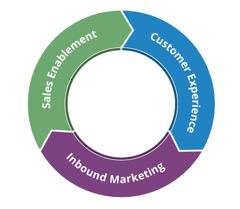
Believe it or not, my tip is to make sure you're aligned with your sales department. There's nothing more frustrating than a mismatch in expectations and results across the board. When planning the year, ensure your plans align. When executing plans, the marketing department should maintain a feedback loop with the sales team on every lead they receive. Over the years, such collaborations have helped me identify numerous ways to improve marketing and business operations and deliver stronger results across channels.
Stanislav Galandzovskyi, User Acquisition Consultant, Galandzovskyi Consultancy
As you plan for the year ahead, the message from every expert is clear: effective marketing in 2026 requires agility, alignment, and a deeper focus on what truly drives impact. These 12 tips offer practical ways to refine your strategy, strengthen collaboration, and stay adaptable in a fast-changing landscape. Use them as a guide to build smarter, more resilient plans, ones grounded in insight, fueled by experimentation, and ready to evolve. The teams that succeed won’t just anticipate change; they’ll be equipped to navigate it.
If you're interested in discussing how to maximize your marketing strategies as you plan for the new year, we invite you to schedule an inbound marketing consultation with our team.

.png?width=80&height=80&name=diamond-badge-color%20(1).png)




.png?width=250&name=diamond-badge-color%20(1).png)